Thirty laws
Short principles, each with a concrete example and a question to bring into your next meeting.
Thank you for the time you have spent on these pages. Every message is read, and answered as soon as possible.
A book for people who have to decide: managers, lecturers, professionals, the curious. No needless jargon, no magical promises about AI. Just how technology changes organisations and people — and what we can do about it.
Short principles, each with a concrete example and a question to bring into your next meeting.
Silicon Valley, luxury, institutions: what worked and what was only theatre.
Criteria you can apply when deciding whether and how to adopt AI. Not abstract philosophy.
01of05
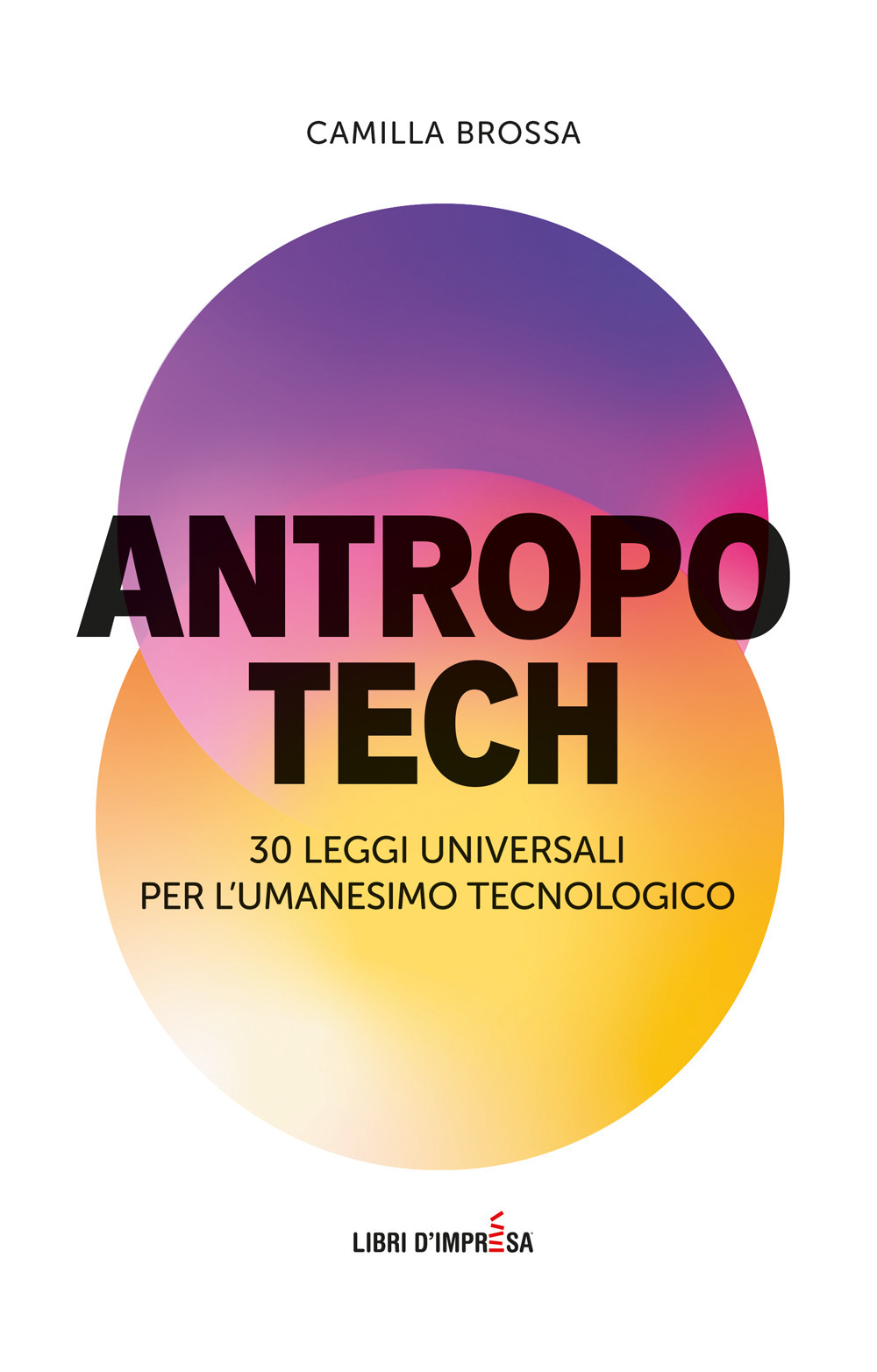
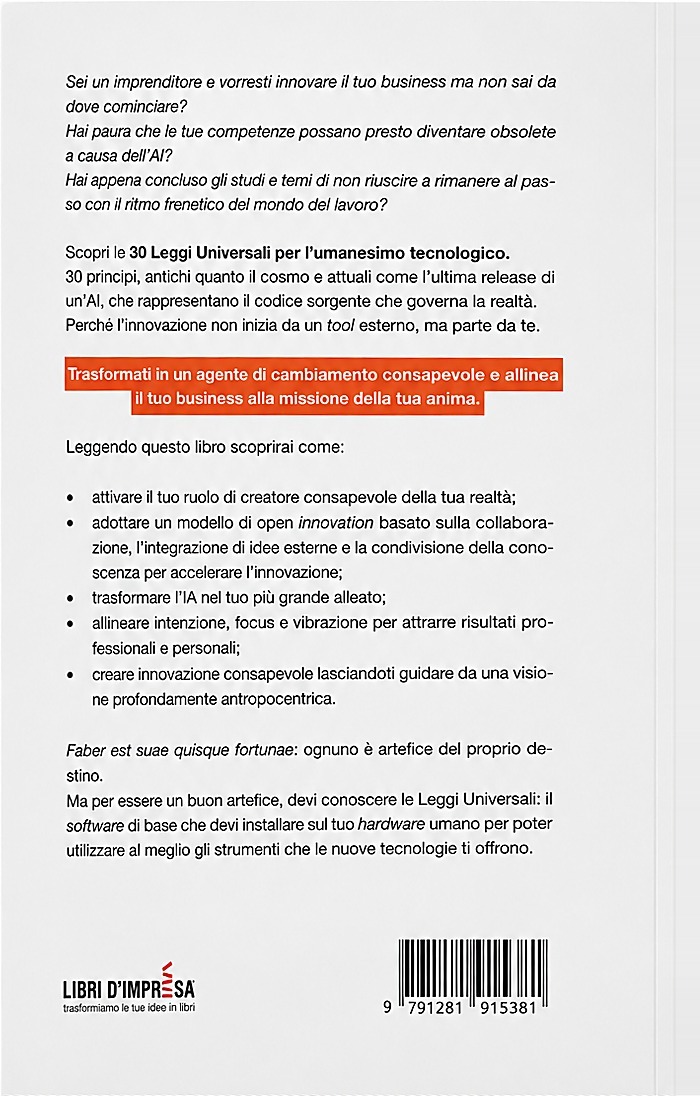
Antropotech – 30 leggi universali dell’umanesimo tecnologico. Thirty laws for reading the relationship between the human being, technology and transformation. The book has its own page: this one holds the thinking behind it.
Not just a set of tools: an extension of the human mind, of culture and of consciousness.
Not an abstraction opposed to innovation: the ability to question the meaning and the impact of what we build.
02of05
Technological humanism does not mean refusing automation or slowing progress. It means choosing consciously. Technological transformation cannot be separated from human, cultural and organisational transformation.
Which work we hand to machines and, before that, which problems are worth solving. The choice comes before the tool.
Which responsibilities we cannot delegate. Some decisions stay human because they are the ones we answer for.
How the value technology generates gets shared: it does not share itself, it is a decision we make.
How we keep control and critical thinking: we do not delegate them to the system we are using.
How we protect people’s autonomy and dignity inside the systems we design.
How we use artificial intelligence to amplify creativity, knowledge and decision-making.
03of05
In the book, universal laws are applied to technology, work and organisations. Here: the law of correspondence and the law of detachment.
Applied to AI: models, algorithms, data and products reflect the values, biases and priorities of the people who design them.
It can apply to leadership or marketing: we build with intention, control the outcome less, and systems can turn out more authentic.
04of05
Among the themes the book takes on: identity, intention, responsibility, leadership, power, balance, transformation, creativity, evolution, collaboration, the future of work, role and talent, the individual and the organisation.
Intention, awareness and our relationship with power shape products, companies, algorithms and technical systems.
Not everything technically possible is desirable: innovation asks for discernment, not only speed.
Big innovations often come from moving an idea from one field to another.
Organisations will have to outgrow rigid roles and hierarchies, and recognise the mix of skills people actually have.
05of05
Antropotech is not only a book: it could become a body of thought, a method, an ecosystem. None of it has a date yet: it will appear here once it exists.
Camilla is developing Antropotech events: they could bring together technology, philosophy, spirituality, leadership and business.
The ecosystem could include keynotes, workshops, corporate training and programmes for people who decide.
Community, podcast, editorial content, universities and cultural institutions: possibilities, not a calendar.